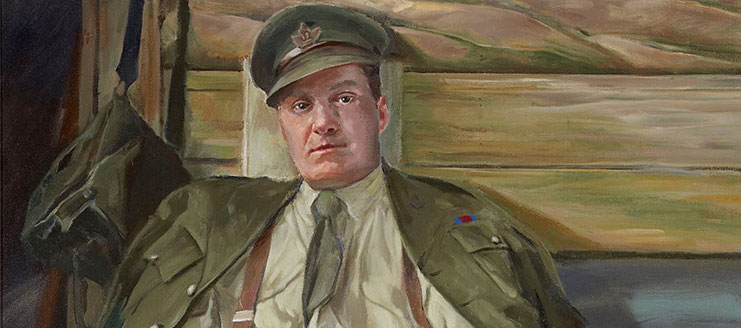
Born in London, England, in 1876, Lionel Millen came to Hamilton,
Ontario, when he was 17. On 10 Sept. 1891, he started to, as he
put it, earn his own living, with Geo. White & Co. Before the First World War,
he established with his younger brother a “small, personal, and
successful” importing business, L. & R. Millen. During his sojourn
overseas, his brother ran the business.
Millen took an early interest in military service joining the 13th Royal
Regiment of Hamilton in 1894. Ten years later, he became a lieutenant in
the newly established 91st Regiment. Promoted a captain in 1910, he was
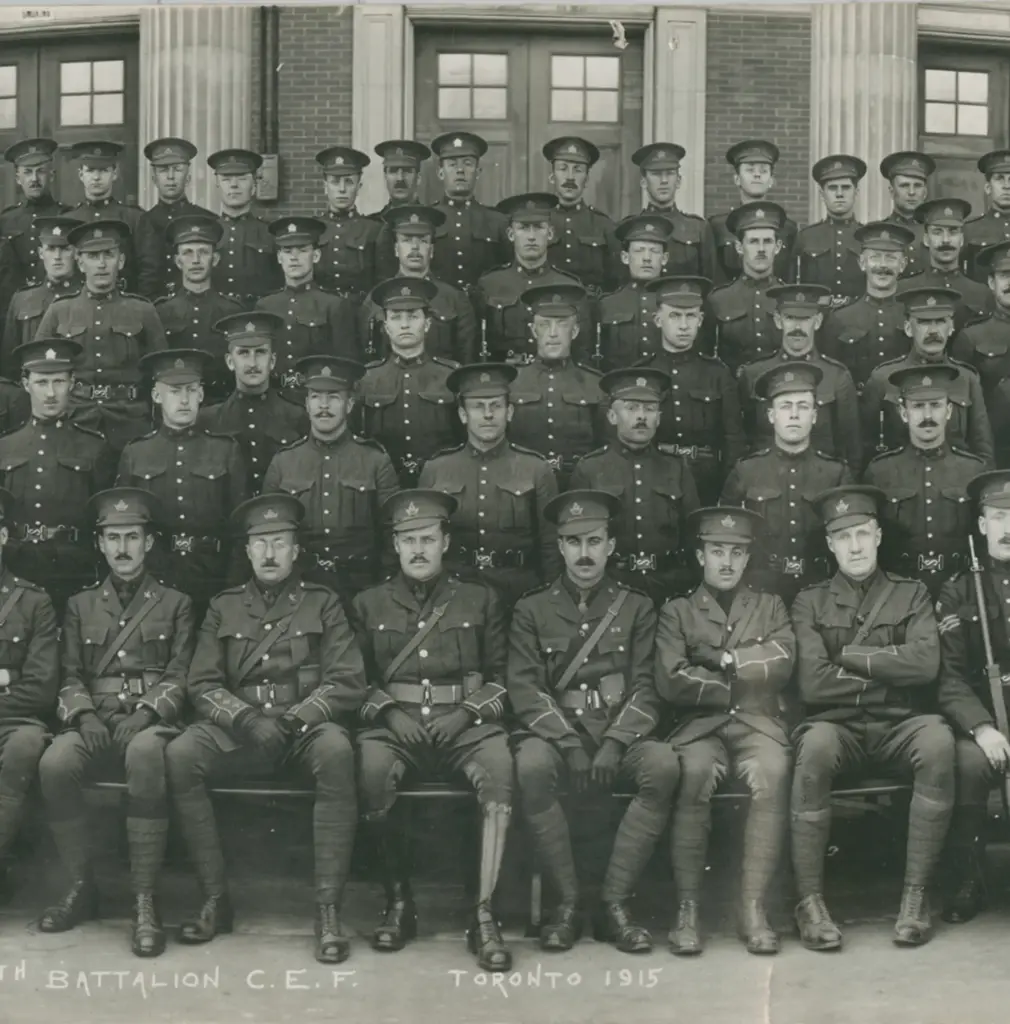
part of the 91st contingent that formed the cadre of original officers
for the 19th Battalion, CEF, in the fall of 1914. By the time the unit
went overseas in May 1915, he was the OC of D Coy.
Millen enjoyed the daily contours of battalion life. An ardent sportsman
and a keen competitor, he exhibited a passion for fitness, training,
and morale. Although he disliked letter writing intensely, he faithfully corresponded with family, friends, and other soldiers, and
especially with his mother.
By October 1915, the 19th had moved into the trenches of the western
front. Within a matter of days, he knew all too well the “slimy, sticky
mud [that] came almost up to my boot-tips.” And the chances to enjoy a
“beautiful tub …, nice hot water” and the opportunity to change “all
my underclothes” soon became luxuries that made life bearable.
His mother sent him clippings about the 19th from the Hamilton papers.
He dismissed the writers’ hyperbolic effusions as “rot.” The impact of battle
was instantaneous albeit expressed to his mother in muted tones:
It would … be a little far fetched to say we
are enjoying ourselves. We are making the best of
everything + are happy, but there is not one of
us would not be glad to have the war over (15 Oct. 1915).
His mother held out great hope for his promotion but he thought there
was “not much chance” of becoming a lieutenant-colonel, let alone a
general (30 Nov. 1915). In spite of the conditions of the trenches – wet,
muddy, rat-infested, and lice-ridden, he thought it “really wonderful
how the men stand it” (12 Dec. 1915). This became a constant refrain: “…
rain and mud, mud and rain, and then some more. It is positively
marvellous how cheerful the men are over all their difficulties, and
discontent” (7 Nov. 1915). He noted in passing that he carried “a pack just
like the men.”
As one year gave way to another, the letters tended to become shorter
and more infrequent. Millen revelled in his company mess and later the
battalion one, always preferring to be with his own (the 19th) rather
than outsiders. At the officers’ Christmas dinner in 1915, he observed
wryly that “everyone made a speech, mostly agreeing what a fine bunch
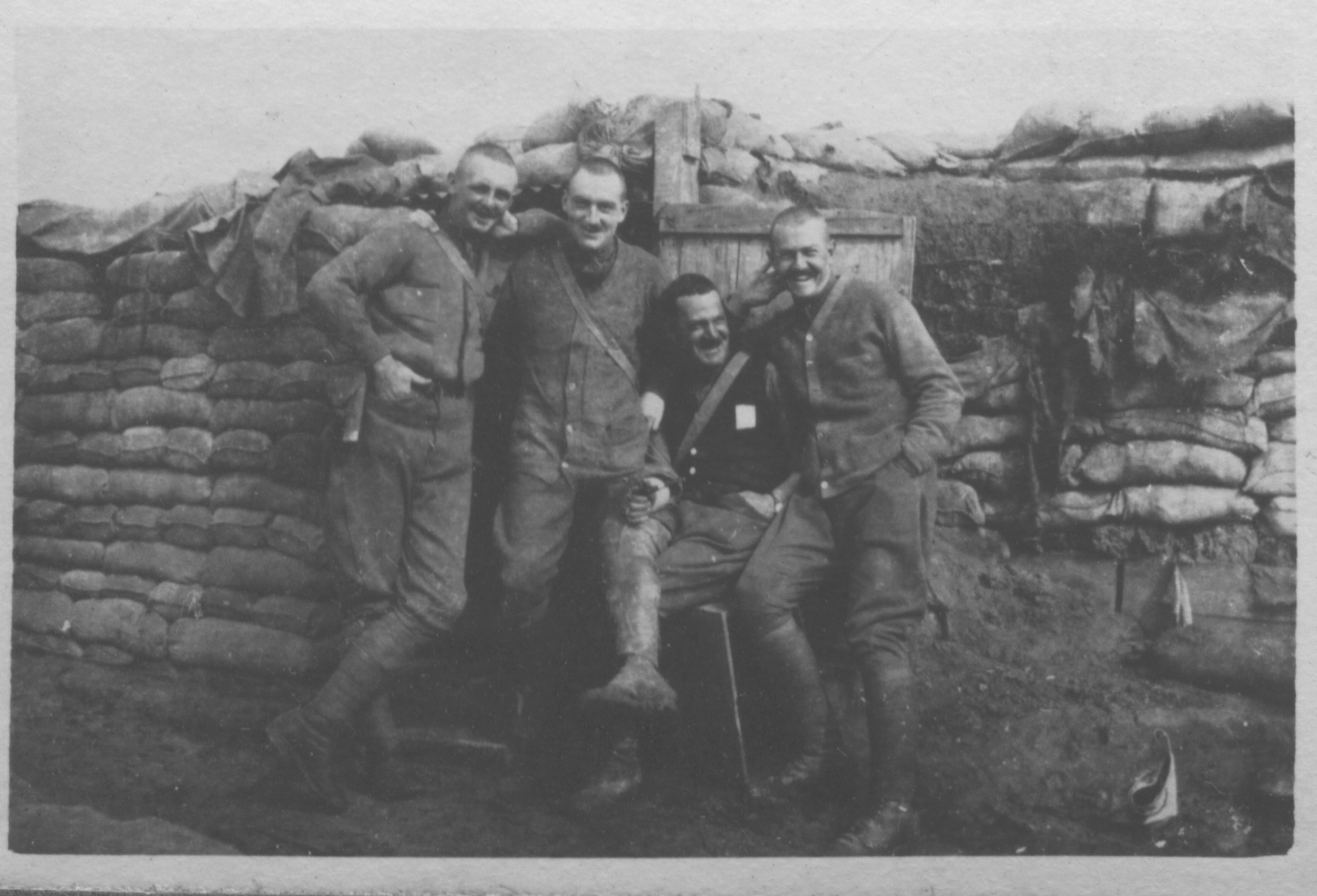
we all were, especially ‘D’ Coy.” Amid the mud and blood, camaraderie
and small creature comforts became increasingly important. He couldn’t
imagine that “you will find a happier bunch of officers anywhere than those
in my company. It is always a case of poking fun at one another.”
The fighting in the Ypres Salient in April 1916 brought the reality of
the western front crashing home. It had been a “strenuous” go in a
“pretty rough part of the line.” Over a period of six days, the 19th had
little sleep, little food (none of it hot), and no chance for even a
cursory wash. Out of the line, Millen longed to sleep, “but worried” by
incoming messages, he knew he could not. “As far as I am concerned, he wrote:”
My duty is the care of about 200 men…. Don’t you worry about honors, none of us are looking for such things. We have just to do the best we can, in our own way, and looking forward to the day when the war is over. We are all willing to forego chances of honors to see that day” (14 April 1916).
At the end of April, he relished the promise of a bath the next day,
noting objectively – “I need it badly.”
When the battalion was out of the front-line trenches, life was more
comfortable. It was also, at times, overtaken by parades, drills, and
inspections: “These … don’t appeal to us very strongly” (21 Aug. 1916).
The fall of 1916 brought the blood-letting called the Somme. There, the
19th lost Maj Bill McLaren, an old 91st officer, Millen’s former 2IC
of D Coy, and his close personal friend. He felt the “loss very much.”
“It’s hard,” he wrote, “awful hard.” By mid-October, the 19th was “now
through with the Somme for which we are all duly thankful. It has been a
costly tour for us, some of my best pals are gone…. The old battalion
is all changed.” He was franker with his brother: “… it is a hard,
hard game and I hope the day is not very distant in the future when it
will all be over. So many of our best and finest going” (27 Oct. 1916).
Millen was now 2IC of the battalion, a dispensation he considered only
temporary. Although he took a CO’s course in November (and did well on
it), he wrote: “I do not think there is much chance for me. I do not think I am a
prime favourite with the Brigadier and we feel one has to get on with
him…. The lack of regard might be mutual between us anyway.” However,
Lt-Col W.R. Turnbull had returned to Canada and hoped to stay – he
did. This was Millen’s chance and he took it.
At Christmas 1916, the battalion was out of the trenches. He visited all
of his companies and talked to the troops. That night, the officers held
a dinner in the mess, “practically just among ourselves” with very few
“outsiders.” And this was how the acting CO liked it best:
For liquid refreshment, don’t be shocked, but what would the dear W.C.T.U. [Women’s Christian Temperance Union] ladies think of this. Cocktails, white wine, champagne, liqueurs, whisky…. Now that is some feast.”
The acting CO had been well received by troops and officers alike. After
an inspection by the GOC, 4th Division, “the general was quite
complimentary in his remarks. Oh! there [is] no question about it. I am
proud of being O.C. 19th Canadian BN, even if it only happens to be for
two months.” It was not. In February 1917, he was promoted
lieutenant-colonel.
Colonel Millen took the battalion through the heaviest fighting of the
war and led it across the Rhine in December 1918. The burden of command
was much heavier and he felt it. He was pleased by its performance in
the late winter of 1917: “I am proud of my, yes my boys, and other
higher ups have also expression [sic] their appreciation…. I often
wish I was out of it, I don’t think I can bring myself to quit until the
game is over” (24 March 1917). Although possessed of a strong constitution, he
was tired, and bronchitis lurked in the background for the remainder of
the war. The Canadian victory at Vimy (9 April 1917) was “absolutely
wonderful, everyone did fine work.” It was a “wonderful feeling to be
living in a place that had been held by the enemy for years and to walk
over ground that had been barred to us.” Nonetheless, there were more
losses, including “Poor Punch Thompson [Maj Russell Barr Thomson], I am
glad he never knew what struck him. I went out myself with some other
officers and found his body and we were able to give him a proper
burial.”
Diversions became more important. He played piano when he could; his
pipe was always there; and whenever possible, he had a hot toddy before
going to bed: “I can tell you if Canada wants prohibition the army
certainly wants its rum.” He kept a puppy, collected flowers whenever he
found them (sending them home to his mother), and relished the leaves to
visit family in England (children were a particular tonic). With a
rather bemused detachment, he strove, unsuccessfully, to convince his
mother that he did not really need the silk collar protectors that she
had insisted on sending him. And he was incensed to learn that his
local church had refused to give communion to a non-Anglican. The
bishop, he thought, “should have put his foot down on that narrow
mindedness. If anything should be broadminded it is religion…. The
parson here,” he observed,” will give communion to anyone” (18 May 1917).
And, of course, there was mess life; he revelled in its pleasures in
a characteristically 91st/19th way:
We are putting on a little bit of swank too. Our mess Waiter dressed in a white coat with brass buttons. On the sideboard is about everything in the drink line. At meal times, he will say to me, ‘What do you care to drink, sir.’ ‘A sherry and bitters please, Cooper,” or a beer or Scotch + Soda or Collins or the case may be…. Nothing like living well when you can.”
Personally, he was thankful for his “good condition and my ability to
feel like a kid most of the time.” He pitched the 19th’s baseball team
to the divisional championship and encouraged its sports activities,
most of which it won. On the home front, there were problems. His wife
suffered from tuberculosis, and her health worsened throughout the war.
His business had been left to the care of his brother, and there were
problems. Moreover, he was providing support for his mother as well as
his wife. Bronchitis flared regularly and then, of course, there was the
battalion and the war.
The 19th was formidable in battalion. It was good and he knew it. It
was always better to be back from the lines; he was never “a damn bit
sorry” to be out of them because of the inevitable loss of “good
comrades.” The Honours List for 1 Jan. 1918 announced that he was awarded the DSO.
The award received nothing more than a passing mention in his letters; likewise
his investiture two months later at Buckingham Palace. He was more
concerned about his wife and her failing condition, because of which he
was given two months of leave to go to Canada.
He rejoined the battalion in June and attended a CO’s conference at Corps
headquarters the following month. He expected that “it would be somewhat of a
party but it is nothing of the sort, they are working us” (31 July 1918). The
Canadian Corps was on the verge of one of the great triumphs of Canadian
arms. August was a trying month at many levels. On the one hand, after a
few days “away from active operations,” he was “able to realize a little
more what it all means.” However, he had learned on 8 August, just after
the 19th had gained its first objective, that his wife had died.
His best friend, Lt-Col Jones, the CO of the 21st Battalion, was killed
during the August push. Given the rapidity of the Canadian advance, he
barely had time to consider his own losses. “We are,” he wrote, “still
moving but that in the right direction.” The 19th was “in territory that
the Bosch had occupied since 1914.” Moreover, he was conscious of things
welling up within him: “I suppose if I was over there I would think of
several things to talk about but they just don’t crop up now” (4 Sept.1918).
In early October, he was awarded a bar to his DSO (he was also mentioned
in despatches on five separate occasions) and became acting brigadier later
in the month. The citation for the bar noted his “skill and intrepidity”
in an attack on three “strongly-held” enemy positions; “his marked
ability in handling difficult situations and his courage and example
contributed largely to the success” of these operations. Millen took a
leave in London just days after the war’s end. Given the opportunity to
receive his bar from the king, he declined. It was “too much bother …
and I was not feeling like it anyways.”
Millen was back to the battalion in December and led the 19th across the
Rhine River on the 13th: “I think my battalion is now further East
than any other British troops.” Although the war was over, “Naturally,”
he wrote, “I want to bring the 19th home.” He applied to have it
demobilized in Hamilton but had “to give up the idea” when it was put to
his officers and most were “against” the suggestion. He hoped, at the
very least, to have a parade there.
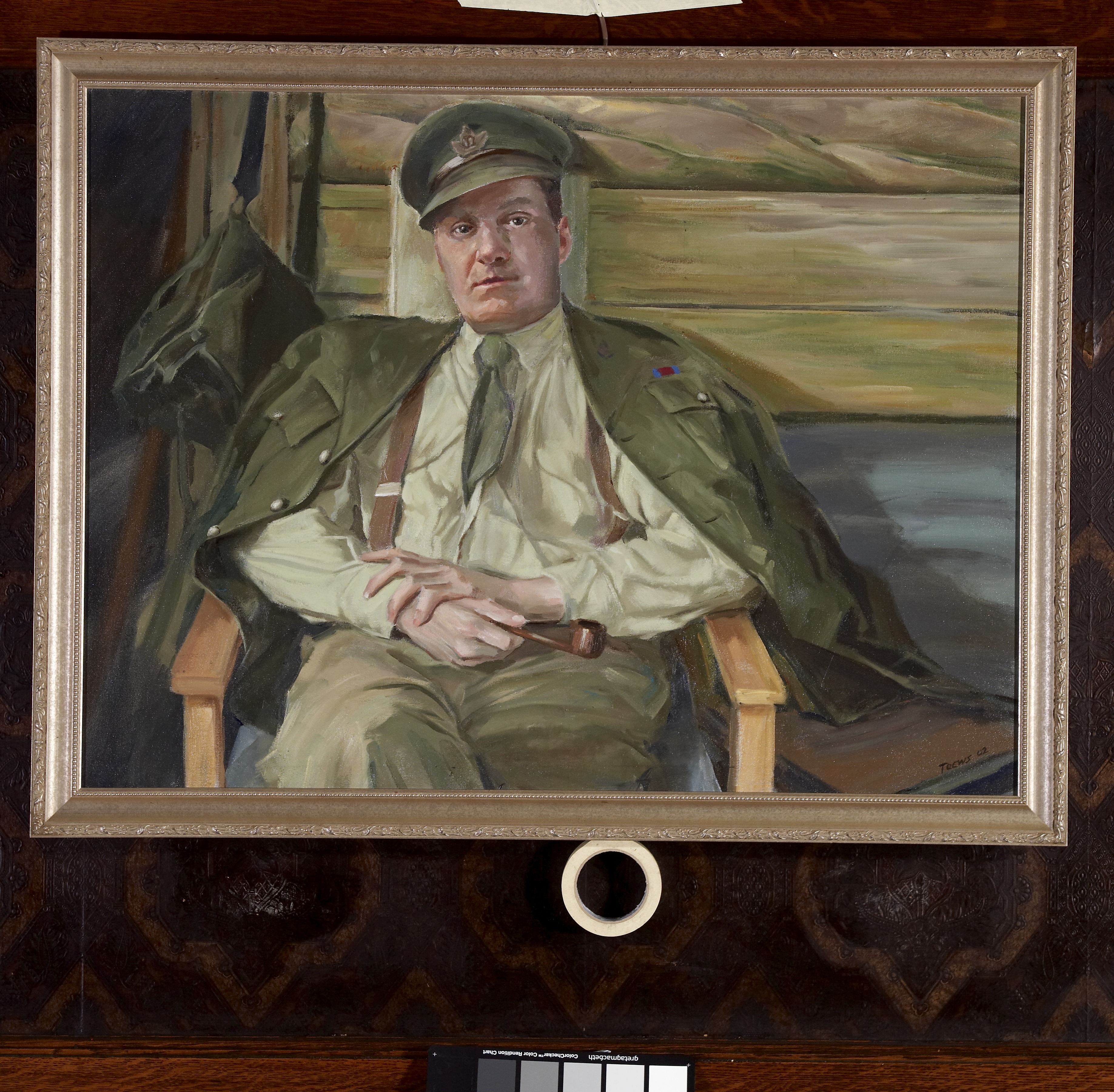
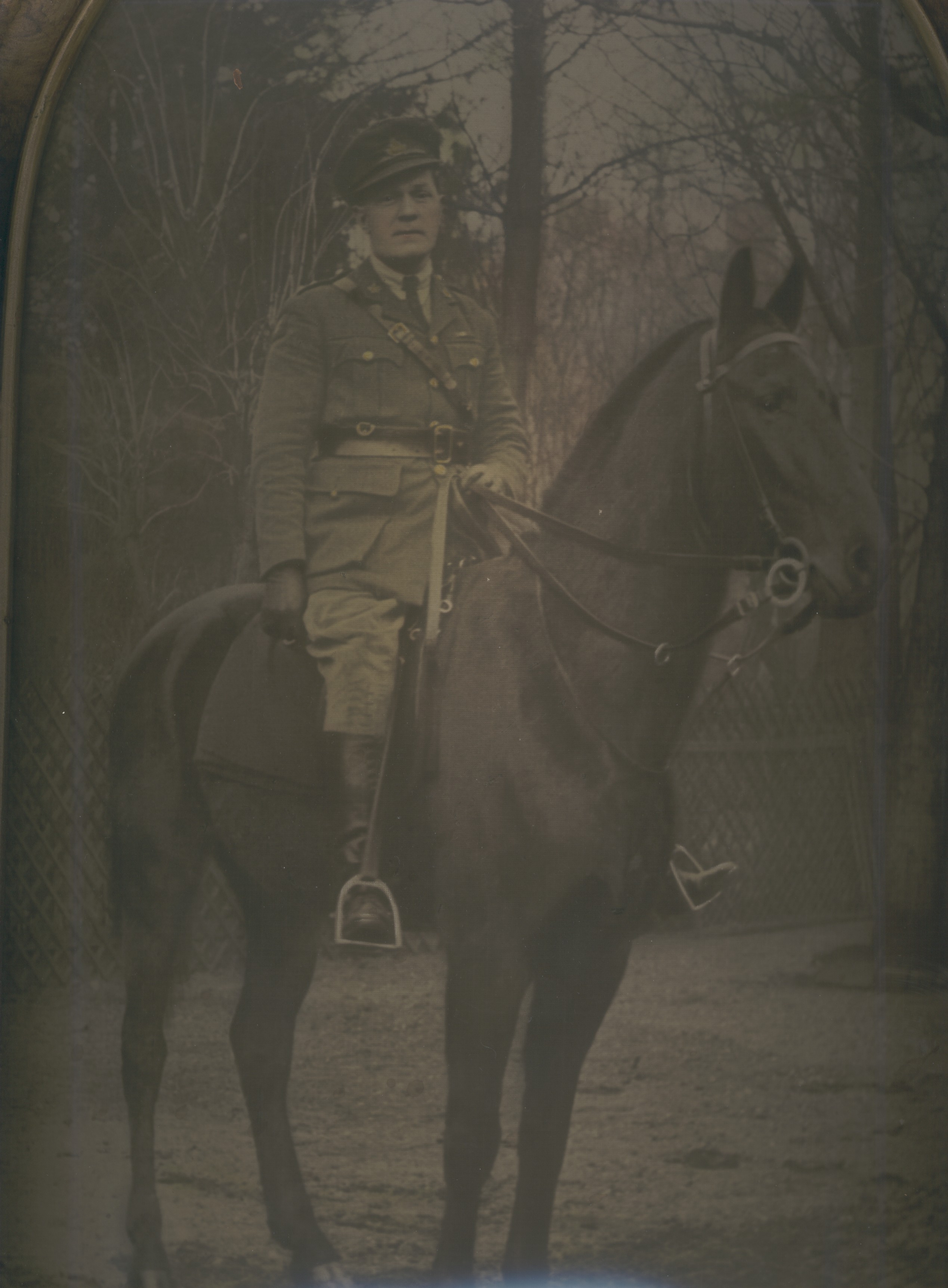
In the months after the war, Millen sent home various pictures of
himself; no one liked them. His mother thought he looked “very sober,”
while others thought him simply “sad.” In typically dismissive fashion,
he attributed his countenance to a “desire not to put on a sickly
smile.” Perhaps. But it is also true that battle, personal loss, and the
burden of command weighed heavily on him. By late 1915, he had longed for the
end of the war, and this before the terrible shocks yet to come. The 19th
had lost 837 men and more than three times that number were wounded. The
battalion had paid a heavy price. And he had lost good friends
and his wife. It is small wonder, then, that those closest to him
noticed a difference in his facial expression. The war had taken its
toll and, no matter how hard he tried not to show it, his face could not
hide it.
The 19th finally came home in May 1919, four years after it had left and
almost five years since mobilization. And Lt-Col Lionel Millen
brought, as he said he would, his boys home. He had done his duty and
stayed with them until the “game” was over. He had been a soldier for 24
years and a good one. Compassionate and broad-minded, he was a leader
who inspired his troops and won their hearts (several personal letters
from them attest to this fact); he was self-effacing; indifferent to
personal honours; contemptuous of parade-square soldiering; attentive to
training, morale, and fitness; and happiest in the company of his own.
He loved mess life and encouraged it, whether in the field or in
garrison. Style was important, and a bit of swank too. He always wore
his head-dress at a jaunty angle and kept a small piece of white heather
in it. His first duty, however, was to his men, to their care and
protection. They did well in battle, and he was satisfied by that fact
while ever conscious of the losses. Lionel Millen was a fine soldier who
epitomizes Argyll (91st/19th) leadership. It is no small wonder then
that he foreshadows so much of the leadership of Lt-Col Dave Stewart.
Together they represent our greatest leaders.
After the war, he returned to Hamilton and his business. In 1920, he
married Mary Macfarlane and they had a daughter, Phyllis. Col Millen
(or “The Colonel,” as he was usually known) loved gardening at his home
in Burlington or at his cottage in Muskoka. He was devoted to scouting
and became the Commissioner for Ontario. During the Second World War, he served
as Spice Controller of Canada for $1 per annum.
According to his daughter, he never missed a 19th Battalion Association
event. Every Remembrance Day, he joined his comrades in Toronto.
Throughout his life, he “always remembered all the men, the exact dates,
and all the details” of his wartime service. And his men remembered him.
At his death, they turned out in “unbelievable numbers” to pay their
last respects.
Robert L. Fraser
Regimental Historian
2003